
Scientists at the Large Hadron Collider (LHC), the world’s largest, have been able to turn lead into gold.
According to Revista Oeste, that was not the purpose of the experiment. The LHC was designed to simulate conditions close to the Big Bang, the collision of beams of lead nuclei at close to the speed of light.
But in the billions of collisions, some lead nuclei lost exactly three protons when they grazed others, and what remained was 79 protons, the number of a gold atom.
See again
-
Extreme heat at the beginning of April has already defined Rio Grande do Sul, and the forecast shows temperatures above 30°C, little rain, and the risk of drought in several areas.
-
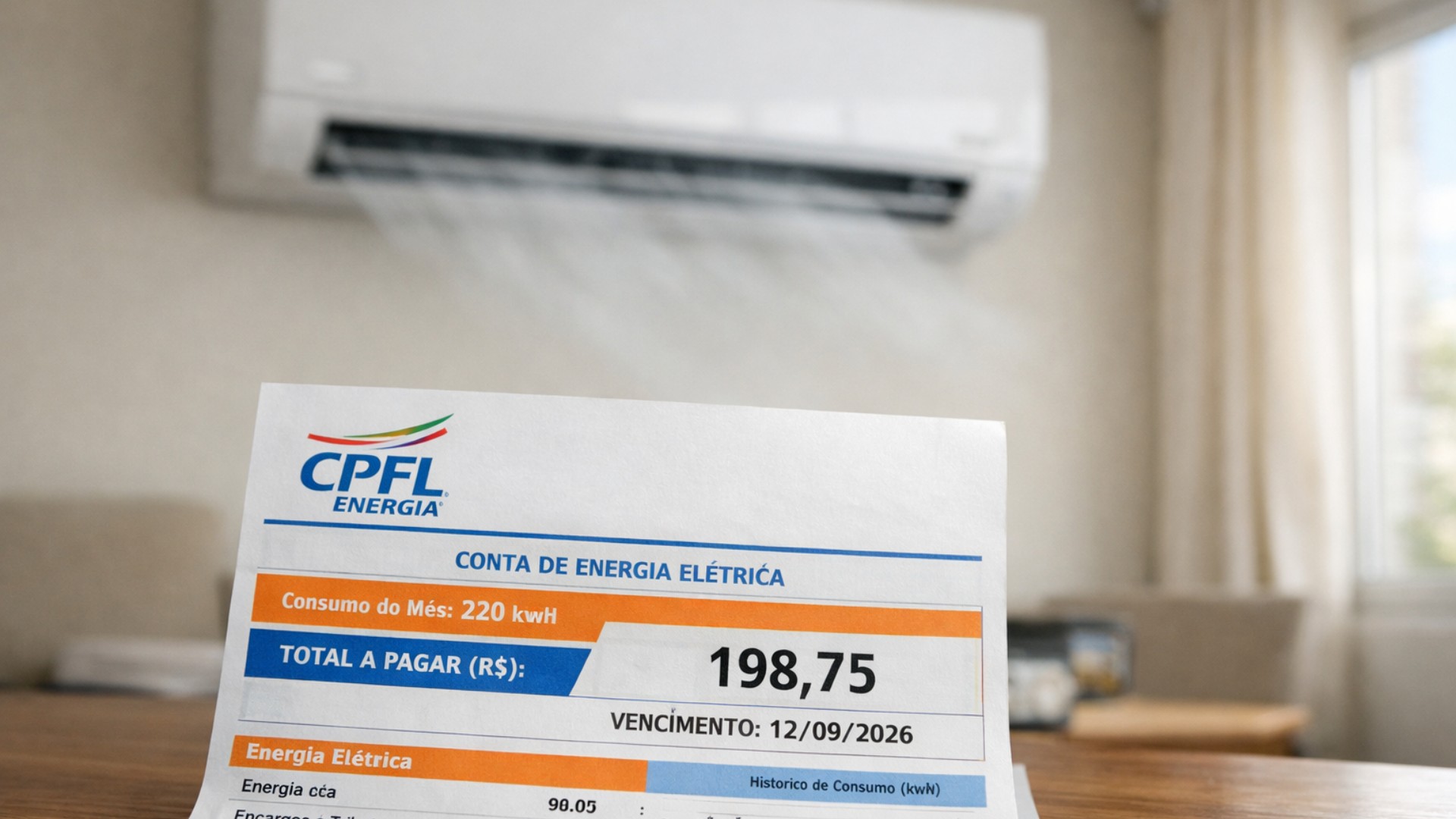
Friend or villain? See how much it will cost to keep the air alive for 8 hours a day in 2026.
-
In 2026, the results of a study involving 140,000 people are expected to be released on a blood test that can detect 50 types of cancer before any symptoms appear, and this could be the biggest medical advance since penicillin.

-
The year 2026 could be the most dangerous time of the year, according to Climatempo and MetSul, with the peak of El Niño between September and November, the increase of Mesoscale Convective Complexes that caused historic floods in Rio Grande do Sul, and the ongoing risk for São Paulo and Mato Grosso do Sul.


Oil and Gas
The Largest Oil, Gas and Energy Event Will Take Place in Brazil: Macaé Energy Will Gather Petrobras, Equinor, Prio, Among Other Providers and Energy Managers for Business, Networks and Job Opportunities.
The Technical Program and Exhibition in the City of Macaé Should Strengthen Discussions on Investment, Energy Transition, and Development of the Oil, Gas, and Energy Chain in the Country…
The discovery accidentally fulfilled a dream that ancient alchemists had been pursuing for centuries: turning lead into gold.
But before you think about the new gold rush, the facts that change everything: the amount of gold produced is measured in trillionths of a gram, and the cost of each atom produced is so high that this modern alchemy is not economically feasible.
Gold is there, it’s real and it’s found with simple tools. But it cannot be seen, measured, or sold.
What distinguishes a lead atom from a gold atom?
In the periodic table, each element is defined by the number of protons in its nucleus, known as the atomic number.
Gold has 79 protons. Lead has 82. The difference between the two is only three protons.
In nuclear terms, turning lead into gold means removing exactly three protons from the nucleus of a lead atom.
It seems simple, but protons are held together by the nuclear force, which is one of the most powerful forces in nature on a subatomic scale.
There is no normal chemical reaction that can remove protons from the nucleus of an atom. It takes energy on the scale of particle collisions for a nucleus to lose protons and become something else.
And that is exactly what is happening, accidentally, inside the LHC.
How the LHC accidentally turns lead into gold during the Big Bang simulation
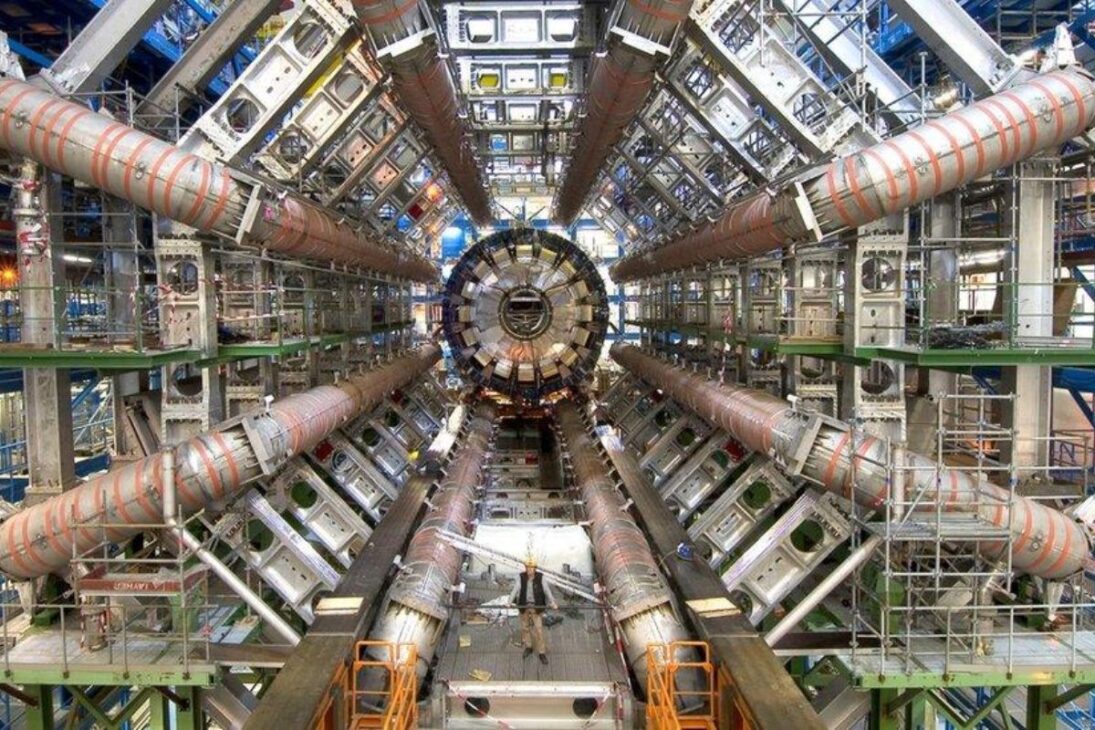
At the LHC, beams of lead nuclei are accelerated to nearly the speed of light and cross each other at certain points in the accelerator.
When two lead nuclei pass very close together without colliding, their electric fields are strengthened to exceptional levels, and this interaction can cause the nucleus to be excited enough to eject protons.
There are two such conflicting situations. In a direct collision, the nuclei collide directly, the nuclear force dominates, and the original structure breaks down, producing a soup of particles.
But in contact with grasses, the nuclei only touch, without direct contact, and the electrical contact is strong enough to cause the loss of protons without destroying the nucleus completely.
It is precisely in these meadows that nuclei with fewer protons appear, including nuclei with 79 protons: gold.
The process is not individually controlled. It happens statistically: among billions of interactions, only a small fraction of nuclei lose the correct number of protons needed to produce gold.
Why the gold produced at the LHC costs more than all the gold in the world
The amount of gold produced at the LHC is measured in trillionths of a gram.
The cost per gram of gold produced by the particle accelerator would be astronomical compared to the market value of the metal, because keeping the LHC running consumes the same amount of energy as an entire city.
The production rate is so low that it would take operating the LHC for millions of years to produce visible amounts of gold.
The accelerator is designed for basic research, not for production applications. Every collision that produces gold is a consequence, not a goal.
In fact, the gold produced at the LHC is real from a physics point of view, but not from an economic point of view. Each atom of gold produced there costs millions of times more than conventionally mined gold.
Ancient chemists were looking for a cheap way to make gold. Science has found a way that works, but it is the most expensive there is.
What the transformation of lead into gold teaches about how things are created in the universe
The real value of converting lead to gold at the LHC is not economic, but scientific.
This method helps physicists understand how heavy elements are formed in extreme cosmic events, such as supernova explosions and neutron star collisions, which are the true gold factories of the universe.
All the gold on Earth was produced in violent cosmic events billions of years ago, before the Solar System was formed.
When the LHC reproduces on a microscopic scale the type of interaction that takes place in these events, scientists can test theories about the structure of particles and the structure of atomic nuclei.
The old alchemical quest to turn lead into gold has taken on a new meaning. Instead of looking for material wealth, science uses this opportunity to explore the nature of things and understand how the universe created the things that create everything that exists.
The gold from the LHC is worthless in the market. But the knowledge it produces is invaluable.
The alchemist’s dream came true in trillionths of a gram
LHC scientists accidentally turned lead into gold during the Big Bang simulation.
Gold is real, measured by sophisticated instruments, but it exists in trillions of grams and costs millions of times more than mined gold. Alchemy works, but the numbers don’t add up.
What the medieval alchemists did not know was that the difference between lead and gold is only three protons, and that nature has been making this change for billions of years in exploding stars. The LHC is just generating activity on a very small scale, proving that change is possible, but reminding us that the universe has always done it well and cheaply.
Did you know that it is possible to turn lead into gold in an accelerator? Do you think technology will one day make this economically viable? What interests you more: that it works or that it costs a lot of money? Leave your comments and share this article with those who love science and curiosity.
#Scientists #worlds #largest #particle #accelerator #succeeded #turning #lead #gold #simulation #Big #Bang #amount #produced #small #order #trillionths #gram