New rules for household waste and recycling came into force in England today as research revealed one in four councils are still not ready to provide the service.
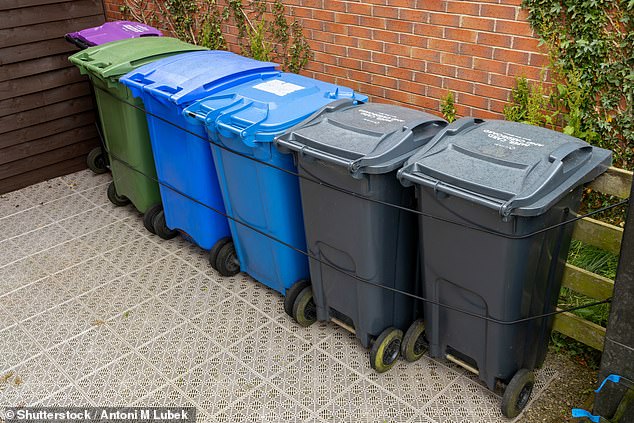
Households will now separate their waste into four different bins for waste collectors to collect as part of changes aimed at making collection more standardized.
One is for food and garden waste; one for paper and card; one for dry materials such as glass, metal and plastic; and one for non-recyclable waste. The changes, first announced in 2024, also see a weekly collection of food waste brought in.
In some areas, paper and cardboard can be collected with other dry recyclables – meaning those households can separate their waste into three bins.
Previous rules introduced in 2021 defined recycling as glass, plastic, food waste, paper and cardboard – resulting in authorities providing bins for each.
An earlier BBC News investigation released today found 79 local authorities – or one in four – did not expect to reach today’s deadline. Some councils have blamed financial issues while others have cited the need for new specialist vehicles.
Around half of councils did not collect food waste on a weekly basis before the new rules were introduced, while some have operated collections for more than a decade – meaning not every council needs to make changes to meet the new rules.
About fifty-seven councils that missed the deadline said they hoped to launch their services by the end of this year, while more than a dozen could not provide a firm date for service launch.
A further 31 councils had agreements in place to start collections later – often due to long existing contracts that would be too expensive to change – so they were not deemed to have missed the deadline.
The delay comes despite the Department for Environment, Food and Rural Affairs (Defra) providing more than £340million in grants and targeted support.
Ministers are making changes in efforts to end the ‘postal lottery’ for bin collections, which is causing confusion as different councils have different policies.
But the changes are costing local authorities millions of pounds to implement, with the Daily Mail finding one council is facing a £21million bill, another is paying £2.1million for 15 new vans and a third is spending just £350,000 on changing bin lids.
Critics including legal expert and self-proclaimed ‘binfluencer’ Gary Rycroft have also raised fears that more bins on the street could block the paths of parents pushing prams.
The TaxPayers’ Alliance warned people that they would be ‘angry if their hard-earned money was thrown into expensive new bins’, adding: ‘Waste collection has been a mess for years and simplifying the system is welcome, but putting in more money is a rubbish idea.’
The government says the changes give different councils the opportunity to provide services that serve their communities – replacing the old place where each authority decided on the types of bins and materials collected, which leads to confusion in the systems.
Ministers also stressed that the new laws will ensure sorting and gathering across the country and ensure that high quality materials can be processed in the country and used by manufacturers to make new products.
Officials say they want the rules to reduce carbon emissions because less waste is burned and reduce other environmental and social impacts of waste disposal.
Regional economy minister Mary Creagh said: “We’re stopping the post code collection lottery and making it easier for people to use it wherever they live.
‘Simplifying these laws will decarbonise, clean up our streets, and help bring pride back to our communities.
Households will now separate their waste into four different bins (stock photo)
‘We will continue to work hand-in-hand with local areas to deliver these changes and ensure that there is as much recycled content in the products we buy.’
It comes as part of the Government’s wider efforts to boost the ‘circular economy’ in the UK so that resources are conserved, waste is reduced and green growth is supported through investment in infrastructure and jobs.
The government has also introduced an extended producer responsibility scheme, which makes packaging manufacturers pay fees to cover the costs of recycling or waste management.
It also plans to launch a delayed deposit refund scheme in 2027, where customers pay a small deposit when they buy drinks in plastic bottles or metal cans, which is refunded when they return the empty container to retailers.
To support other local authorities with challenges related to the provision of areas, the Government has said that additional support will be provided, such as agreed transitional arrangements allowing for a later implementation date.
Ministers added that more than £78 million has been received from councils in England this year, which includes money to run weekly food waste collections for all households.
This is alongside £340million to support councils as they prepare for new collections.
Claire Shrewsbury, director of insight and innovation at climate action organization Wrap, said the new regulations represented “the biggest push for recycling policy in England in 20 years”.
He added: ‘Now, wherever you are, you will have the same service at home, at work, and when you go out and about. We’re a community of people who recycle, but many households put two or more items in the recycling bin each week – out of frustration.
‘Making it easy to use will help to end this, and if we all reused one piece every week, we’d save enough energy to power every home in Birmingham for a year.
Food families are where we will see the greatest success. It’s difficult to prevent all food waste, so recycling one refrigerator of unavoidable food can power your refrigerator for 18 hours, and an entire truck can store that refrigerator for five years.’
#rules #introducing #weekly #food #waste #collections #today #quarter #councils