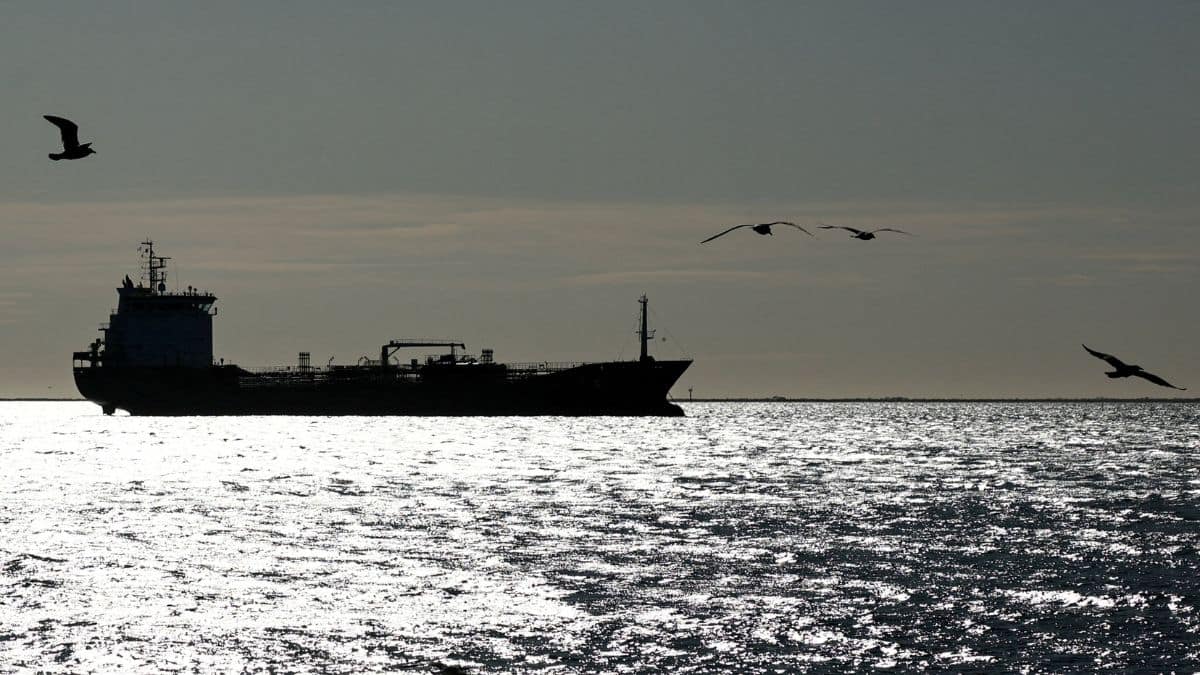
A Kuwaiti oil tanker carrying millions of barrels of crude was hit near Dubai.
The ship, Al Salmi, was damaged and caught fire after what Kuwaiti authorities described as an Iranian airstrike, sparking fears of an oil spill in the strategic region.
What exactly happened to the Al Salmi ship?
The Al Salmi, a Kuwait-flagged very large crude carrier (VLCC), was targeted while docked at Jebel Ali port in Dubai, United Arab Emirates.
According to the Kuwait Petroleum Corporation (KPC), the strike occurred at around 12:10 am on Tuesday (March 31).
Officials confirmed that the attack caused structural damage to the ship’s hull and caused a fire inside the ship. The Dubai Press Office said that emergency response and marine firefighting units were mobilized immediately and were able to control the fire before it went out.
“All 24 crew members on the Kuwaiti Al Salmi ship have been confirmed safe following the incident in Dubai waters,” officials said, adding that no injuries were reported.
The tanker, built in 2011, is a 333-meter long vessel with a 60-meter bridge and a displacement of 319,660 tons. It flies under the Kuwaiti flag and is affiliated with the Kuwait Petroleum Corporation in terms of ownership and operations.
How much oil was on the ship, and why is it important?
At the time of the incident, Al Salmi was completely full, greatly increasing any potential contamination.
Data from ocean science and tracking platforms showed the ship was carrying about 2 million barrels of crude oil, including about 1.2 million barrels from Saudi Arabia and about 800,000 barrels from Kuwait.
It is reported that the goods were ordered about a month ago, when the tank was on its way to Qingdao, China. The amount of oil on board makes even a partial breakdown of the ship a serious concern, as it can release large quantities of waste into the surrounding waters.
KPC acknowledged the accident, stating that the incident resulted in “damage to the ship’s hull and a fire inside the ship, and oil that may have spilled into the surrounding waters.”
What is the current status of the ship?
After the strike, the authorities moved to stabilize the situation. Officials in Dubai have confirmed that the fire has been extinguished and that relevant teams are continuing to monitor the tank and assess the extent of the damage.
KPC stressed that a full technical review is ongoing. The company said: “A full assessment of the damage is being carried out, and all necessary measures are being taken to protect the vessel and minimize any environmental impact.”
Emergency teams had previously noted that they were working “to contain and control the situation in close coordination with the relevant authorities,” indicating the depth of the response effort.
So far, no major oil leak has been officially confirmed, but the possibility remains under intense scrutiny as authorities examine the structural integrity of the tank.
Who beat Al Salmi?
The Al Salmi attack is not an isolated incident but part of a broader pattern of escalating hostilities in the Gulf region.
Since the end of January 2026, when the United States and Israel began to attack Iran, the sea lanes in the Gulf and the Strait of Hormuz have seen repeated attacks that include missiles and drone operations.
On the same day as the tank incident, another vessel – a Greek-operated vessel operating near Ras Tanura in Saudi Arabia – reported two separate projectile incidents within an hour.
According to marine risk analysts, the projectiles hit the water near the ship, about 22 kilometers northeast of Ras Tanura. The crew was reported safe.
In a separate development earlier in March, Iran’s Islamic Revolutionary Guard Corps protested an attack on a Liberian-flagged ship.
Despite these events, no group has claimed responsibility for the Al Salmi strike.
What has been the effect on global oil markets?
The attack had immediate effects on global energy markets. Brent crude prices rose more than 2 percent to $115.17 a barrel in early Asian trade after news of the strike.
Although the prices later decreased slightly amid reports suggesting opportunities for negotiations, the broad trend is still important.
Brent crude is on pace to record a 59 percent monthly gain in March, marking its biggest increase ever, driven largely by the ongoing conflict in the Middle East.
How would the oil spill work in Gulf conditions?
If a spill were to occur, the characteristics of the Persian Gulf would influence the way the oil spreads and continues. In warm waters such as those from Dubai, crude oil tends to spread faster over the surface of the water, forming a thin film.
Some of the oil, especially the lighter compounds, can evaporate within 24 to 48 hours, releasing organic compounds into the atmosphere. Although this reduces the amount of oil in the water, it creates air quality problems.
The action of the waves can turn the oil into a thick, emulsified substance, often described as a mousse-like mixture, which is very difficult to remove.
Additionally, current environmental patterns – which often move counter-clockwise – combined with prevailing winds can push any oil spills towards beaches or the surrounding marine environment.
What environment and infrastructure are at risk?
The potential environmental impact of the spill near Jebel Ali extends beyond open water. Nearby areas include areas of environmental concern and important resources.
Jebel Ali Marine Sanctuary is a protected area that serves as a habitat for the critically endangered Hawksbill turtle. When the nesting season begins in March and April, beach pollution can disrupt the breeding season or harm the young.
Coastal mangroves, especially those with Gray Mangrove (Avicennia marina), are at high risk of exposure to oil. Oil can coat roots, impairing their ability to absorb oxygen, while residues trapped in mud can last longer due to low oxygen levels.
Nearby coral reefs and sea beds, which support marine biodiversity and species such as dugongs, may also face significant damage. Oil exposure can damage coral health and reproduction, while sea grass can be suffocated, disrupting the food chain.
In addition to environmental problems, infrastructure such as Jebel Ali Power and Desalination Complex may be affected. Oil entering seawater intake systems has the potential to disrupt desalination processes, posing risks to water supply systems.
Also Watch:
With feedback from organizations
End of Article
#Iran #hit #oil #tanker #Dubai #environmental #disaster