Finding life beyond our planetary system is more than measuring exoplanet sizes, as rocky, Earth-sized worlds may not host life as we know it. Although exoplanets can be shown directly by blocking the light of their star, these images are not spectacular and do not have the resolution to provide sufficient information about their habitation. Therefore, astronomers are limited to studying the exoplanet’s atmosphere, and this has proven to be very useful in teaching scientists about the exoplanet’s structure and evolution, and whether it contains the necessary ingredients for life as we know it.
Now, researchers at the Carnegie Institute of Science are developing a new instrument called the Henrietta Infrared Spectrograph with the aim of advancing the science of the Earth’s atmosphere by providing more information than ever before. Although several ground-based telescopes are still used to study exoplanet atmospheres, including the Very Large Telescope, the Keck Observatory, and the Gemini Observatory, to name just a few, those telescopes are designed to do many types of science, including the evolution of stars and black holes. On the other hand, Henrietta will be the first to conduct a survey of the atmosphere in the near-infrared light, providing important information about exoplanets that go beyond physical characteristics.
“Weight and size only tell you so much,” said Dr. Jason Williams, who is a postdoctoral fellow at Carnegie Observatories and a scientist and expert on the Henrietta project. If you were to measure Earth and Venus that way, you would think they are almost the same.” But we know that their atmosphere—and their conditions—are completely different.”
To study exoplanet atmospheres, Henrietta will take advantage of the transit method, a common method for identifying exoplanets and studying their atmospheres. The transit process occurs when an exoplanet passes in front of its star, temporarily blocking the star’s light, and this is used to detect the new exoplanet and measure its size. This method has also been used to study the atmosphere of exoplanets, when astronomers examine the light of stars passing through the atmosphere of exoplanets in a method called spectroscopy. With this, astronomers were able to identify common biomarkers such as carbon, oxygen and hydrogen in several exoplanet regions.
Henrietta will study exoplanet atmospheres in infrared light, which is invisible to the human eye, but where molecules are best seen. Furthermore, Henrietta will achieve these technologies with improved accuracy combined with the dry environment of Chile. With this, Henrietta is intended to be able to reach the conditions of the exoplanet’s atmosphere that science has long imagined from space-based telescopes.
When Henrietta is scheduled to see the first light in late April, Dr. Williams will present a paper at SPIE Astronomical Telescopes + Instrumentation in Copenhagen, Denmark in July 2026 entitled “From assembly to first light: assembly, analysis, and deployment of the Henrietta Exoatmosphere spectrograph”. This paper will discuss Henrietta’s mission and scientific capabilities, particularly how Henrietta will study exoplanet atmospheres at a wide range of wavelengths, including optical to near infrared.
Another paper entitled “Design control of the Henrietta spectrograph on the Swope Telescope” will be presented by Dr. William Schoenell, who is an Instrumentation Software Developer for the Carnegie Institute of Washington, at the same meeting. This paper will discuss the meeting of Henrietta and her operational equipment with the Swope Telescope, including the challenges and scientific impact. Both scientists are co-authors of each paper, along with several other scientists at the Carnegie Observatories and across academia.
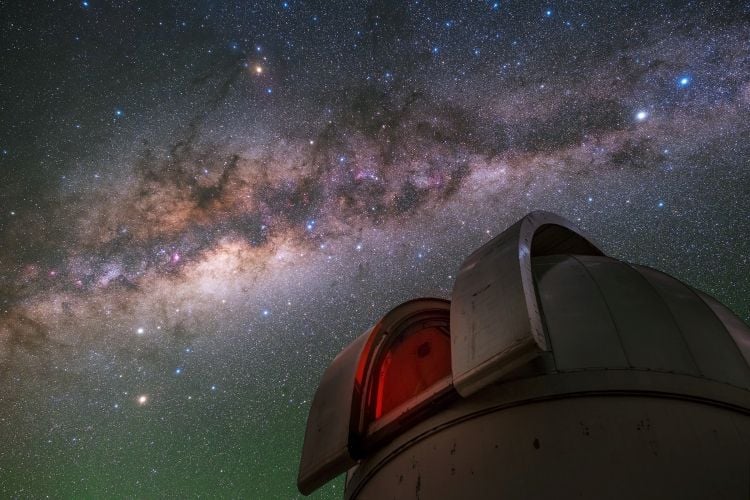
This platform is named after the American astronomer, Dr. Henrietta Hill Swope, whose research focused on various stars. However, his greatest contribution to science was calculating the distance of the Andromeda Galaxy at a distance of 2.2 million light years, which is very close to the current estimated distance of 2.5 million light years. Currently, the telescope is being installed at the Swope Telescope (named in his honor in 1976) at Carnegie Science’s Las Campanas Observatory in Chile.
What new insight into exoplanet atmospheres will the Henrietta Infrared Spectrograph teach scientists in the coming years and decades? Only time will tell, and that’s why we’re science!
As always, keep doing science and keep looking up!
#Henriettas #Spectrograph #Monitor #Alien #Space