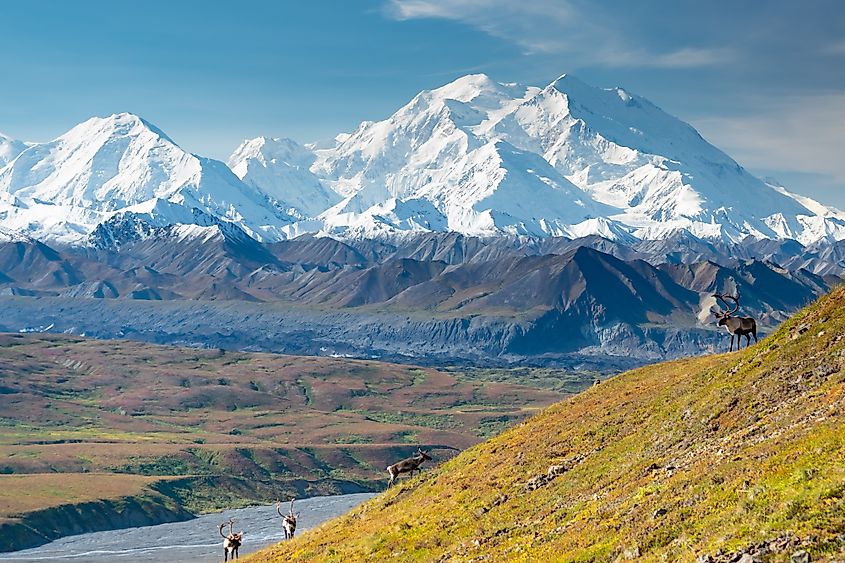
Alaska covers an area of more than 665,000 square kilometers and has more national parks and wildlife refuges than the rest of the country combined. All are important when planning a wildlife trip to this beautiful North American destination. Unlike other parts of the country, the animals here have a lot of space to roam, so knowing where to find them requires more effort. But whether you want to see bears grazing on salmon in Denali National Park or whales basking in the Kenai Fjords, Alaska is a wildlife watcher’s paradise.
Denali National Park and Preserve
Covering more than six million acres of Interior Alaska, Denali National Park and Preserve is home to 39 species of mammals and 169 species of birds. But many visitors come with one goal in mind: the opportunity to see the park’s so-called “Big Five” of grizzly bears, wolves, moose, caribou and Dall sheep.
The park’s popularity stems from its high rates of wildlife sightings, which result from the fact that private vehicles are not allowed past Mile 15 on the 92-mile Denali Park road. From here, only buses and cars ply the road, resulting in low traffic… and lots of animal activity.

Grizzlies feed in the summer here, and Thorofare Pass near Mile 37 has excellent views. The Denali Caribou herd uses the park year-round, providing some of the most reliable wildlife sightings. Dall sheep tend to stick to the steep slopes visible from Polychrome Pass, about 45 kilometers in. Wolves are also present in the park but are rarely seen, preferring to avoid human traffic as much as possible.
Bus tours leave from the Denali Visitor Center at the park entrance and range from half-day Tundra Wilderness Tours to daily tours that reach Kantishna at the end of the trail. For the best chance to see all of the “Big Five” species, longer routes that reach beyond the Eielson Visitor Center at Mile 66 are recommended.
Kenai Fjords National Park

Kenai Fjords National Park, located on the Kenai Peninsula near the town of Seward, protects a spectacular stretch of coastline where the ice descends to the water’s edge, creating ideal conditions for marine life to use as feeding and spawning grounds.
This confluence of the Gulf of Alaska and the inland system of Resurrection Bay supports five species of whales, large colonies of sea lions and seals, as well as sea otters. Other wildlife to see include Dall’s porpoises, horned puffins and bald eagles. Mountain goats and black bears also inhabit the park’s coastal slopes and can sometimes be seen in the water.

Day cruises from Seward offer the most convenient way to access the park’s wildlife. One of the best, Major Marine Tours, offers half-day cruises through Resurrection Bay as well as daily cruises to Aialik Bay, where there is an ice pack. Kenai Fjords Tours runs similar routes when it stops at the Chiswell Islands, part of the Alaska Maritime National Wildlife Refuge, where puffins roost on the reef from May to August.
Humpback whales are present in the fjords from mid-April to November, feeding on krill and small fish, and orca pods regularly in Resurrection Bay from mid-May to mid-June.
Katmai National Park and Preservation

Located on the Alaska Peninsula, 290 miles southwest of Anchorage, Katmai National Park and Preserve is where you’ll find one of the most amazing wildlife gatherings in North America. The action takes place in the summer when sockeye salmon come up the Brooks River in large numbers, attracting brown bears to feast. It’s a spectacular place, especially near Brooks Falls, a six-meter waterfall that forces salmon to come out of the water to continue their upward journey. Bears crash into the mouth of the falls to stop the leaping salmon.
Three high observation platforms have been built along the river: one at the falls itself, one below the river, and one at the mouth of the river where it meets Lake Naknek. As many as 43 bears have been recorded at the falls in one day, with peak sightings occurring in July when sockeye are most active. The second bear strike occurs in September, when the spawning salmon weaken and die, making them easy to catch.

Getting to Brooks Camp, the area’s ranger station, requires a plane or boat from King Salmon, 30 miles away. But it is worth the effort and cost. Regular scheduled services connect Anchorage with King Salmon, where floatplanes fill the final leg. Tours, including Rust’s Flying Service, run day trips from Anchorage that include a plane transfer, a safety stop at the Brooks Camp Visitor Center, and a few hours at the observation deck.
If you want more time here, Brooks Lodge on the shores of Naknek Lake offers multi-day packages. Reservations are hard to come by, though, and are handled through a lottery system.
Arctic National Wildlife Refuge

The Arctic National Wildlife Refuge (ANWR) covers most of the 19 million acres of northeastern Alaska, from the Brooks Range in the south through the boreal forest to the Beaufort Sea coast in the north. And for wildlife enthusiasts, it’s a must-see as it’s the only place in the United States where all three North American bear species (black, brown, and polar) share one protected area.
There is also a herd of Porcupine caribou, one of the largest in the world at around 200,000 (calving season is in June). Other wildlife you’ll want to look out for include Dall sheep, muskoxen, wolves and coyotes, all of which inhabit the mountains and riverways inland. The refuge is also home to more than 200 species of birds from four continents that come to breed, feed and rest during the short Arctic summer.

Although access to ANWR requires extensive planning (there are no roads, trails or facilities on the refuge), it can be done by charter plane from Fairbanks. River rafting trips are a great way to get around the inner sanctum, and trips usually last six to ten days. Polar bear viewing is also popular, with groups such as the Northern Alaska Tour Company running day trips from Fairbanks to Kaktovik, combining a floatplane flight over the refuge with a boat trip to bear viewing sites.
Your Alaska Wildlife Experience
Getting to the best wildlife spots in Alaska requires a lot of planning, but it’s worth the effort. The operating window for most of these experiences runs from late May to September, and those who want to visit more places in one trip stay in Anchorage, which is located near the Kenai Peninsula and is the main hub for flights to Katmai and other remote parks. ANWR is the most difficult (and expensive) terrain, requiring advance planning, directional adjustments, and flexibility for weather delays, but it’s the most rewarding if you screw it up.
#Wildlife #Hotspots #Alaska